


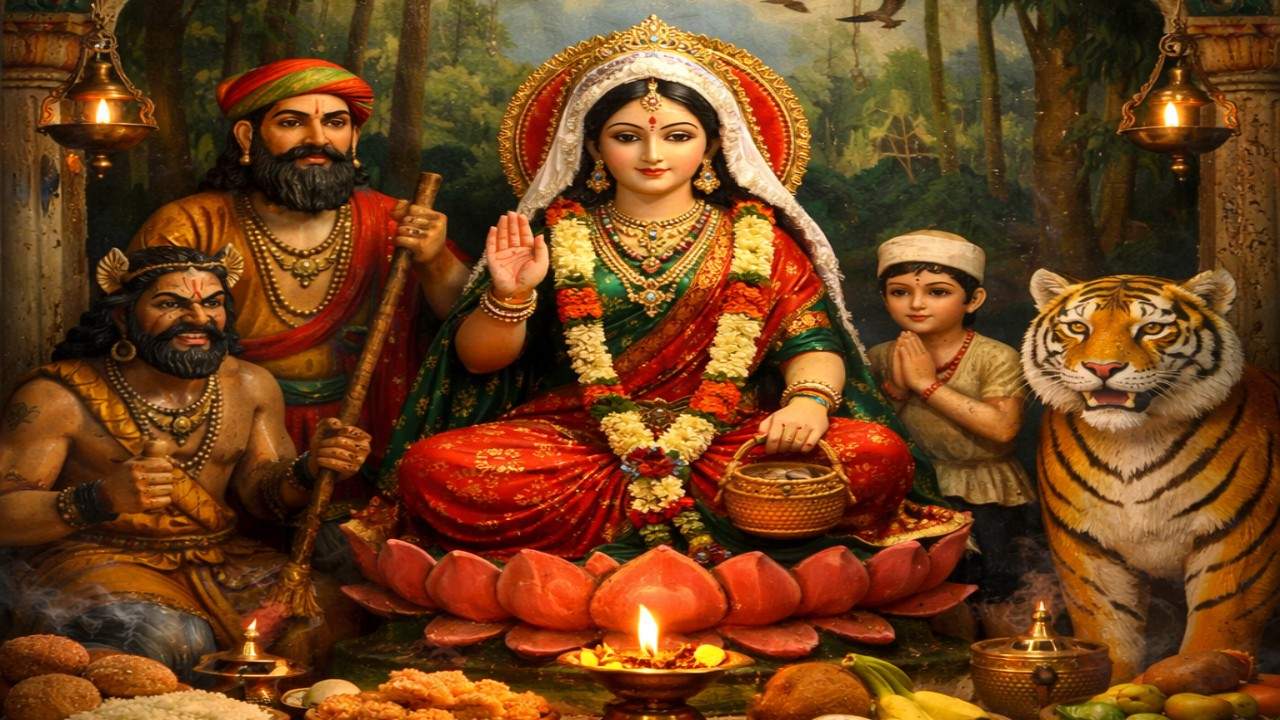
Bonbibi: The Guardian Mother of the Sundarbans
Bonbibi: The Guardian Mother of the Sundarbans
“With broken pots and damp firewood,
How shall I cook my rice today?
Mother Bonbibi, show me the way…”
Singing in trembling voices, the people of the Sundarbans still pray like this — asking the Forest Mother for protection. To them she is Bonbibi: goddess, saint, protector, and eternal guardian of the mangrove wilderness.
She is known by many names — Bondevi, Bondurga, Tiger Mother — yet her identity beautifully crosses religions. To Hindus she is a goddess. To Muslims she is a Pirani, a holy protector. To everyone who enters the forest — honey collectors, woodcutters, fishermen, and boatmen — she is faith itself.
The Sundarbans, shared between Bangladesh and India, may be divided by borders, but Bonbibi belongs equally to both lands. Each year, communities across the delta celebrate the festival of Bonbibi Puja, honoring a guardian spirit woven deeply into the cultural soul of South Bengal.
To understand the Sundarbans is to understand Bonbibi.
The Birth of the Forest Mother
According to historian Satish Chandra Mitra’s History of Jessore-Khulna, Bonbibi was born around the 16th century into an Arab fakir family. Her father Ibrahim, longing for a child, married a second wife, Gulal Bibi, with the consent of his first wife Fulbibi. But jealousy soon poisoned the household.
When Gulal Bibi became pregnant, Fulbibi demanded her promised wish: exile. Gulal Bibi was abandoned in the deep forests of the Sundarbans. There, in the heart of the jungle, she gave birth to twins — Bonbibi and Shah Janguli.
Legend says heavenly maidens descended to protect the children, and Bonbibi herself was raised by a doe of the forest. When their father returned years later to bring them back to Mecca, Bonbibi refused. Her heart belonged to the people and creatures of the Sundarbans. She chose the forest as her eternal home, and her brother stayed by her side.
Other versions of the legend tell of magical journeys, divine guidance by angels, and epic battles — but all stories agree on one truth: Bonbibi was destined to rule not by power, but by compassion.
The Battle with Dakshin Rai
When Bonbibi arrived in the land of the “Eighteen Tides,” the Sundarbans was ruled by the cruel king Dakshin Rai. Hearing the call to prayer from Shah Janguli, the king saw them as a threat. War followed.
Dakshin Rai’s mother Narayani led an army against the siblings. Though the battle was fierce, Bonbibi’s divine strength prevailed. Yet instead of destroying her enemies, she showed mercy — granting half her territory to Narayani and her son. Peace replaced tyranny.
From that day onward, Bonbibi became the protector of the people, while Dakshin Rai retreated into the darkest corners of the forest, forever a symbol of danger and greed.
The Story of Dukhe: Mercy Over Fear
Among the most beloved legends is the story of Dukhe, a poor boy betrayed by a greedy honey trader named Dhona. Left alone in the jungle as a human sacrifice to Dakshin Rai, Dukhe remembered his mother’s words:
“In the forest, you have another mother. Call her if danger comes.”
As the tiger-king approached, Dukhe prayed to Bonbibi. She arrived instantly with Shah Janguli, defeating Dakshin Rai and saving the child. Dukhe returned home on the back of Bonbibi’s sacred crocodile, carrying treasure and blessings.
From that day, villages across the Sundarbans began worshipping Bonbibi as their eternal guardian. Even today, her annual festival on the first day of the Bengali month of Magh draws thousands who seek her protection before entering the forest.
Bonbibi is not just a myth. She is the emotional heartbeat of the Sundarbans.
Walk the Land of Legends with Zeropoint
When you travel through the Sundarbans, you are not just visiting a forest — you are entering a living mythology. Every creek has a story. Every island holds whispers of Bonbibi’s protection. The air itself carries centuries of faith.
Zeropoint’s Sundarban tours invite travelers to experience this mystical world up close. With expert local guides, safe river journeys, and deep cultural storytelling, Zeropoint transforms a trip into an unforgettable encounter with history, folklore, and nature.
You’ll sail through mangrove tunnels, visit Bonbibi shrines, hear legends from forest communities, and witness the delicate balance between humans and wilderness that has survived for centuries.
This is not ordinary tourism.
This is stepping into a sacred landscape.
A Journey Beyond Travel
The Sundarbans teaches humility. It reminds us that humans survive here not by conquering nature, but by respecting it. Bonbibi represents that ancient contract between people and forest — a promise of harmony.
To explore the Sundarbans is to walk in the footsteps of legends.
And the best stories are meant to be lived.Ready to discover the spirit of the Sundarbans?
Travel with Zeropoint and experience the forest where myth and reality breathe together.


Leave a Reply
Your email address will not be published. Required fields are marked